
SLP Tips for Supporting Oral Motor Skills in Babies and Toddlers
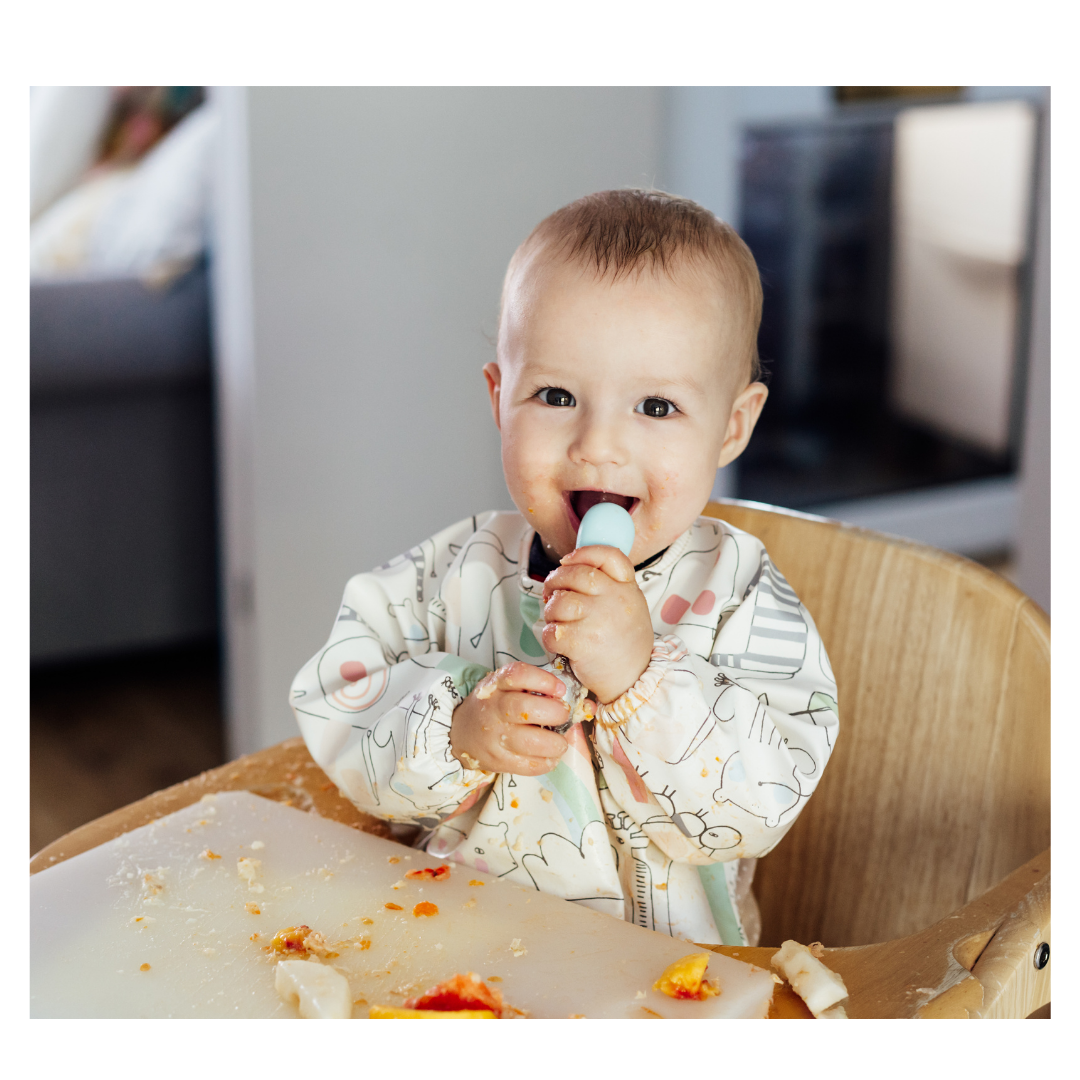
Imagine your child taking a bite of a crunchy apple for the first time. That simple act does much more than fill their tummy- it engages the jaw, tongue, lips, and cheeks, building the strength and coordination needed for feeding, speech, and even breathing. Chewing also helps children explore new textures and sensory experiences while developing strong oral muscles that support healthy eating, speech production, and overall oral function. Encouraging chewing and practicing oral motor skills lays the foundation for these critical skills and helps children gain confidence with different foods.
But in today’s world, children don’t always get as many opportunities to utilize these orofacial muscles. Many babies rely on pacifiers, thumb sucking, or other oral soothing behaviors, and busy family schedules often make soft foods or convenient pouches a practical choice (we get it!). While pouches and soft foods can certainly have a place in a child’s diet, they often require very little chewing. Foods like very soft processed items or foods that break apart easily may not provide much jaw exercise, and pouches primarily involve sucking rather than chewing. When these habits are combined, children may have fewer chances to fully use and strengthen the muscles needed for healthy chewing development.
When these muscles aren’t used regularly, the jaw may develop more narrowly, which can contribute to a smaller airway. Over time, factors such as minimal chewing, prolonged pacifier use, or primarily soft diets can lead to a weaker jaw, bite misalignment, or other airway concerns (learn more about airway health, warning signs, and ways to support a healthy airway here: Part 1 and Part 2).
Weak or underdeveloped orofacial muscles can make it harder for children to manage different textures while eating. As a result, they may avoid new foods, gag or cough more frequently, or stick to a limited variety of foods. These same muscle challenges can also affect how they produce speech sounds, impacting their overall communication development.
With the right support and practice, children can strengthen these skills and gain confidence with different foods. To help your child build strong orofacial skills, here are 5 expert tips you can try at home today 🦷👶
1. Introduce Teethers
Teethers can be a fun way for children to explore new sensations while strengthening their jaw and improving coordination. They can also be very helpful during, you guessed it, teething! Check out our favorite teethers here.
2. Use a Mirror
A mirror helps children build awareness of how their mouth moves.
Try:
Making silly faces together
Having your child imitate you
Looking in the mirror while wiping their face
Practicing sounds while brushing teeth
Showing them how their lips, tongue, and teeth move while chewing
This visual feedback can improve oral awareness and coordination. Our favorite mirror for littles also works great for tummy time, too!
3. Oral Motor Fun
Activities that involve blowing are great for strengthening oral muscles.
Try blowing bubbles, balloons, pinwheels, tissues across the table, or on hot food before eating! These exercises aren’t just fun- they give your child a chance to practice functional skills. Strengthening the lips, cheeks, and tongue while building breath control helps support chewing, swallowing, and speech in everyday activities.
4. Skip the Hard-Spout Sippy Cup
Using straw cups and open cups is a great way to support your child’s oral musculature development. These cups help strengthen the muscles in the tongue and lips while improving coordination and control.
You can make it even more challenging by offering thicker liquids through a straw, like yogurt or applesauce, which further builds oral strength and skills. For our top cup recommendations, check out: Skip the Sippy: A Speech-Language Pathologist’s Guide on Sippy Cups.
5. Offer a Variety of Textures
The best way to practice chewing skills is simply to CHEW!
Offer foods with different textures such as crunchy, chewy, and smooth. You can also change the shapes, temperatures, and utensils used during meals to build these skills, too.
Some chewy foods you can introduce to your little one include dried fruit strips (like apple), snap pea crisps, soft-cooked carrot or sweet potato sticks, hard-boiled egg slices, toast strips, and cheese sticks.
Safety Tips for Chewy Foods:
Always supervise meals and snacks.
Serve food in safe, manageable sizes.
Avoid choking hazards such as popcorn, nuts, whole grapes, and large raw vegetables.
Introduce new textures slowly.
Bonus Tip: Eliminate the Pacifier!
While removing a pacifier alone will not instantly improve chewing skills, we generally recommend eliminating pacifier use by 12 months of age to support oral development. Be sure to read more about pacifiers and weaning tips.
When Should You Be Concerned?
You may want to consult a professional if your child shows any of the following signs:
Pockets food in their cheeks or under their tongue
Frequently gags or coughs during meals
Chews with their mouth open
Avoids certain food groups
Strongly prefers only soft foods
Swallows food whole
Other signs to watch for include:
Frequent drooling
Open-mouth breathing
Snoring
Any other concerns related to airway or oral development
For more information, check out our Feeding Therapy 101 blog post, which is a great resource for understanding these behaviors and knowing when to seek support.
Searching for speech therapy near me?
If you have concerns, we’re here to help. We offer free consultations and provide in-home evaluations and therapy for oral motor, speech, and feeding needs. Contact us today to learn more!