
The Surprising Benefits of Boredom for Speech and Language Development

“I’m Bored!”
Ah, sweet summertime. More downtime, fewer sports and activities, no homework… and the phrase parents love to hear over and over again: “I’m bored!”
As a parent, you may find yourself thinking: Don't we have enough toys?Should I plan another activity? Do we need to go somewhere?
It's easy to feel like you need to keep your child constantly entertained. But here's the good news: boredom can actually support speech, language and social-emotional development.
Unstructured Play
When children aren't being entertained every minute, they have the opportunity to engage in something incredibly valuable—unstructured play. Unstructured play is child-led play and there is no “right“ way to play, no specific instructions to follow, and no expected outcome. Instead, children get to use their imagination to decide what happens next.
Unstructured play gives children endless opportunities to explore, communicate, and problem-solve. Just think of all the fun to be had!
There is certainly a time and place to encourage and model other types of play, as each type of play offers unique opportunities for learning and development. Be sure to check out the importance of playand ways to encourage play at home.
4 Ways Boredom Can Support Language Development
1. Boredom encourages communication
When children aren't being constantly entertained, they naturally have more opportunities to communicate or initiate conversation. As they come up with their own games and activities, they ask questions, share ideas, make plans, solve problems, negotiate with siblings or friends, and request the materials they need. All of these everyday interactions help strengthen important speech and language skills.
Downtime also creates more opportunities for meaningful family conversations. Without the rush of a packed schedule, there's more time to listen, ask questions, and engage with your child. Whether they're excited to tell you about the fort they built, explain the rules of a game they invented, or share the story behind a drawing, these everyday moments become powerful opportunities to strengthen sentence structure, practice storytelling, and develop conversational skills.
2. Boredom encourages pretend play
With more free time comes more opportunities for your child to simply be a child. And we know just how powerful play can be! While there is certainly a time and place for structured activities, unstructured play gives children the freedom to explore new ideas.
You may be wondering: How does unstructured play encourage pretend play? When children aren't given a specific activity or a “right way” to play, they have the freedom to decide what happens next. This freedom allows their imagination to take over and naturally leads to pretend play, or “make-believe” play where children create stories, act out different roles, and imagine new scenarios. A box can become a spaceship or a blanket can become a fort!
Pretend play is a wonderful opportunity for speech and language development. As children create stories, take on roles, and imagine new scenarios, they build vocabulary, solve problems, and learn to communicate their ideas.
3. Boredom encourages problem-solving
When children have to figure out what to do next, they're practicing valuable thinking and language skills. They learn to come up with ideas, change plans when something doesn't work, find creative solutions, and make decisions independently.
For example, if your child is building a spaceship out of blankets and chairs but needs a steering wheel, pause and let them brainstorm. Giving them space to come up with ideas, try solutions, and adjust their plan helps build problem-solving skills and encourages them to communicate their thoughts.
These are all important foundations for communication and executive functioning.
4. Boredom encourages emotional regulation
Boredom gives children the opportunity to learn how to manage uncomfortable feelings. There will be times when your child needs to sit and wait, like at a restaurant, school event, or sibling’s activity, without being able to find a new activity.
Learning to cope with boredom helps children build patience and flexibility.
Expert Tip: Before these moments, set expectations by reminding your child that feeling bored is okay and teaching them appropriate ways to handle it. Ideas like thinking of a favorite memory, singing a song in their head, counting objects, or using their imagination.
Your child says “I’m bored”… Now What?
It can be tempting to jump in with solutions.
Maybe you immediately offer a snack, suggest an activity, or think of somewhere to go. While those ideas certainly have their place, try resisting the urge to solve the problem right away.
Instead, ask open-ended questions that encourage your child to think:
"What could you create?"
"What ideas do you have?"
"What materials could you use?"
"Is there something you haven't played with in a while?"
These questions encourage problem-solving while giving your child ownership of the solution.
If your child responds with, "Nothing," or "There's nothing to do," it's okay to provide a little support without taking over. Sometimes children simply need a starting point.
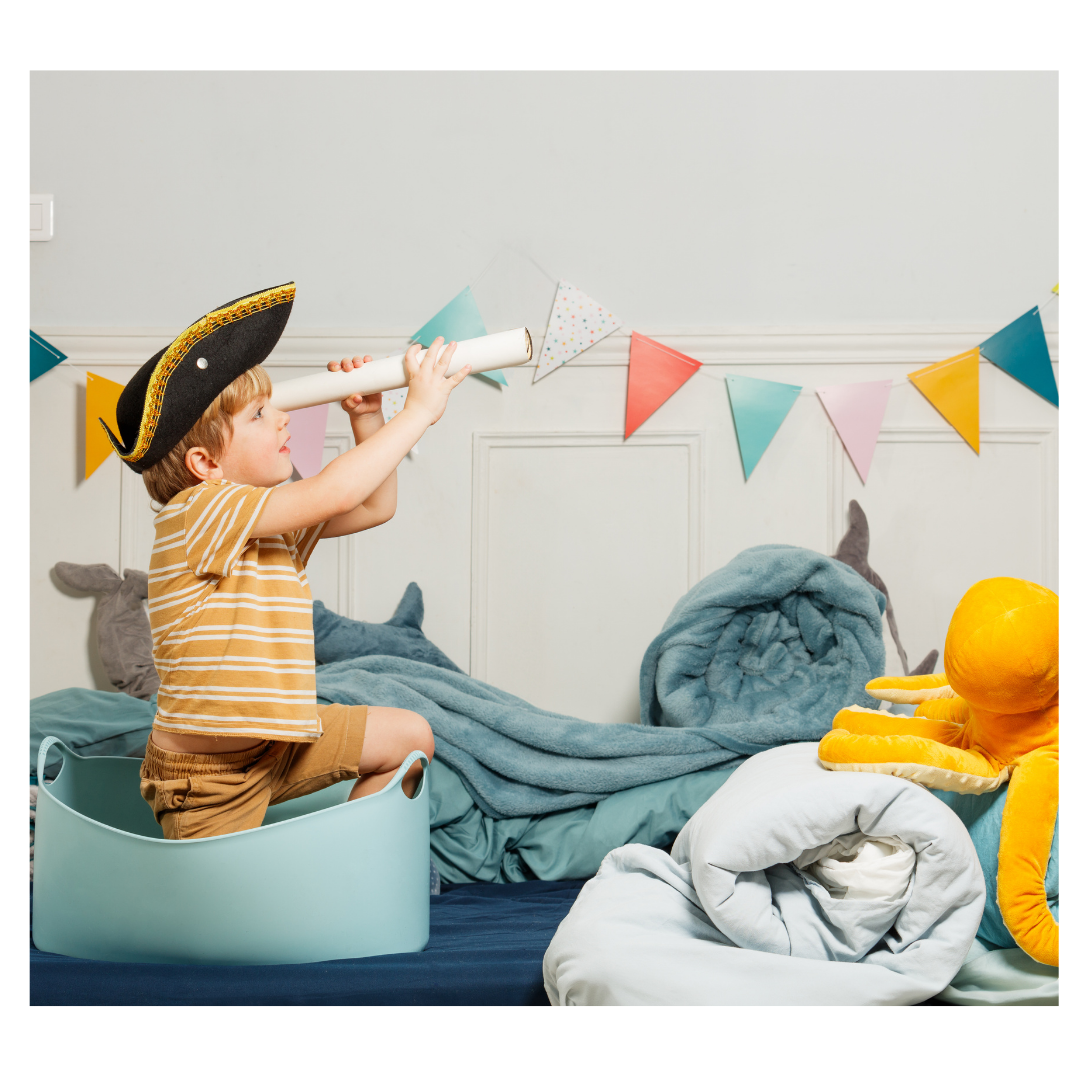
Offer Open-Ended Materials
Rather than directing the play, offer materials that can become almost anything.
Some favorites include:
Blocks: wooden blocks, foam blocks
Play dough: ice cream set, pizza set
Boxes/recycled materials
Toy animals or figurines: safari animals, farm animals
Then, allow your child to lead!
Boredom Can Be Good!
You don’t need toys and activities galore to support your child’s speech and language development. These skills don’t only grow during structured, planned activities—they develop through opportunities!
Boredom can certainly come with some growing pains, especially in a world where it’s easy to hand a child a new toy or turn on an iPad to fill the quiet moments. But boredom isn’t a bad thing! Instead, it can be the starting point for communication.
By giving children space to wonder, we are giving them valuable opportunities to practice language skills in a natural and meaningful way. Just think of all the speech and language development happening during those moments of imagination and play!
Questions about your child’s speech, language, or reading development? Reach out to schedule a free phone consultation or speech-language evaluation. We’re here to support your family every step of the way!