
Spreading the Love: Building Speech & Language Skills with Valentine’s Cards
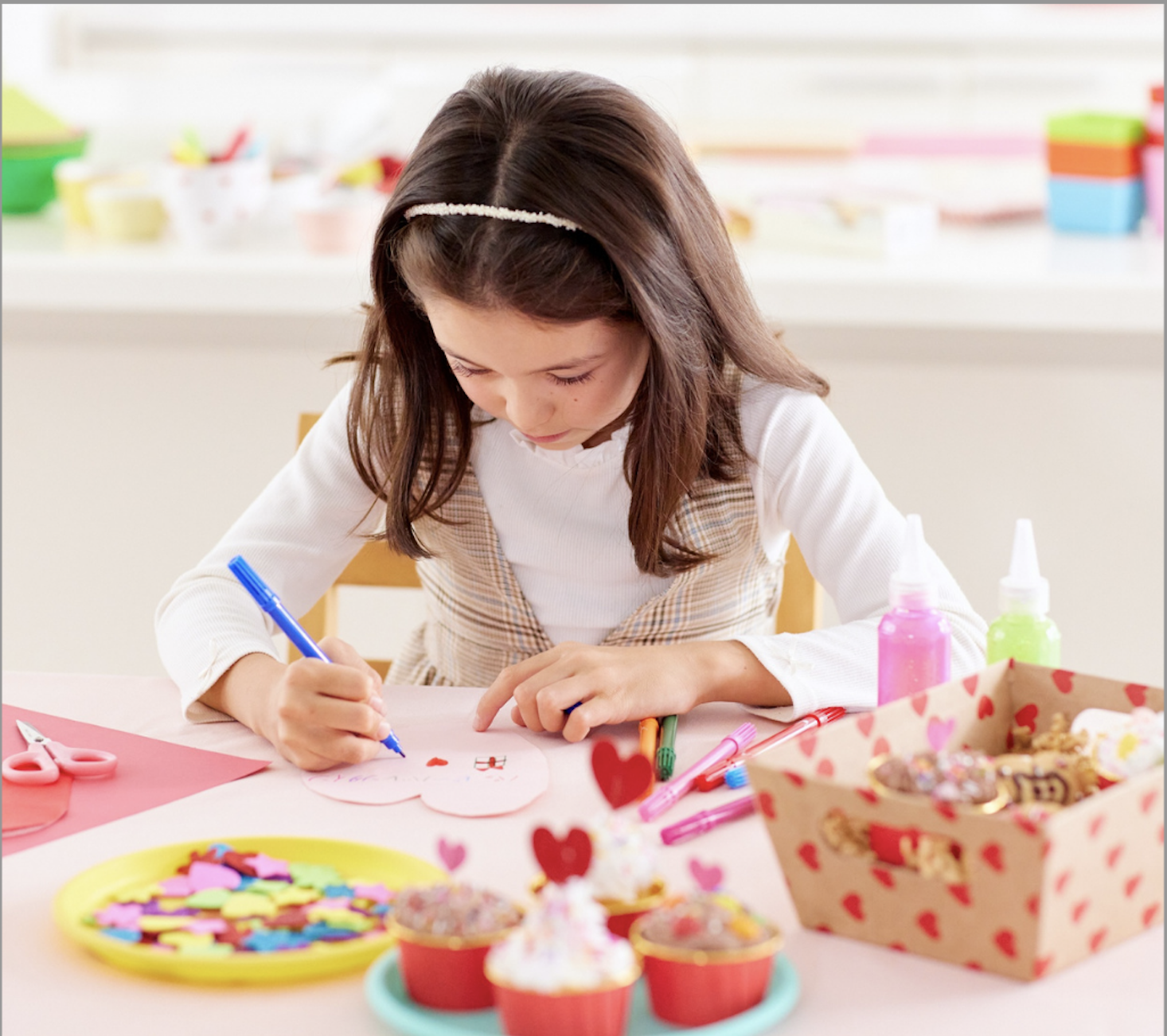
Let’s celebrate love month! Beyond the candy and treats, Valentine’s Day is a wonderful opportunity to support your child’s speech and language development. In today’s post, we’re sharing how Valentine’s cards can be used as a simple, motivating activity filled with communication skills.
First things first… bring out the crafts!
Pipe cleaners, stickers, scented markers, you name it! Homemade cards are the best. This is a perfect chance to skip store-bought options and create something special together! Letting your child design their own card makes the activity more engaging, while giving them choices encourages creativity, participation, and communication.
Keep reading for easy ways to use Valentine’s cards to support speech, language, and social communication skills at home.
Expressive Language
Valentine’s cards are a simple, fun way to help your child build vocabulary at home. When writing the cards, include holiday-themed words such as love, heart, friend, and celebrate, descriptive words like sparkly or colorful, and synonyms for love, such as care, affection, or fondness.
Encourage your child to describe their card by asking questions like, “How did you make your card?” or “What materials did you use?” Follow-up questions like, “Why did you pick those colors?” or “What part was your favorite?” can also help practice explaining their ideas and sharing their thoughts.
Receptive Language
Practice following directions to strengthen your child’s listening and attention skills. Give simple, clear instructions such as, “Draw a red heart on the front of your card” or “Write the word love in pink.”
Once your child finishes their card and writes a message, ask questions like, “Who is this card for?” or “What message did you write?” to support critical thinking and language growth.
Speech Sounds
When your child is designing their own card, encourage them to include words with their target speech sounds and practice reading them aloud. Tip: Bring out a mirror to provide extra support when producing these sounds!
For additional practice, you can take your child to the store and explore Valentine’s cards together, asking them to find words that contain their target sounds. A fun, hands-on way to reinforce speech and language skills!
Social Skills
There are so many ways to build social skills with Valentine’s cards.
Practice role-playing giving or receiving a card and talk with your child about what they might say or how they might act in each situation. This promotes social communication skills and helps children practice using language appropriately in a variety of social situations.
Talk with your child about how the words and tone might change depending on who the card is for, such as a friend, family member, or teacher.
Early Literacy
Encourage your child to think of words that rhyme to create a short poem in the card (e.g., sweet → treat, heat, sheet). This activity helps develop phonological awareness and strengthens their ability to recognize sound patterns in words.
Break longer words into syllables and clap them out together, like Val-en-tine. This fun activity teaches your child to hear and segment sounds, which supports both reading and speech development.
If you’re looking for more Valentine’s Day–themed activities for kids, be sure to check out our Valentine Book List, Valen-slime craft, or Love Bug craft. Plus, don’t miss this blog post for a creative way to use your extra candy! These activities are a great way to inspire creativity and learning while celebrating the holiday.
From all of us at OWLS Therapy, Happy Valentine’s Day! May your day be filled with special moments with your little ones.
Searching for Speech Therapy Near Me?
Contact Us for a Free Child Development Consultation! Our professionals will determine if an evaluation is recommended and provide answers to all your questions. We’re committed to guiding your child’s growth and success.