
Using Everyday Routines to Support Your Child’s Language Development

As parents, we’re constantly asking ourselves: Should I be doing more?
The internet is overflowing with advice on how to parent, and while that can be helpful, it can also feel overwhelming. What course do you need to take? What product should you buy to help your child learn? Sometimes, it’s just too much.
That’s why it’s important to remember this: there’s no fancy iPad app or special toy that will magically teach your child language. Language truly grows through everyday interactions. While new materials or play items can be fun (and it’s great to switch things up now and then!), know that you are the most powerful tool your child has.
So… what does that actually mean?
This post aims to show you how language can be naturally supported through everyday routines.Whether your child needs extra support or already has strong language skills, these strategies are helpful for all children. This post is not intended to replace individualized therapy if developmental concerns arise, but instead to support language growth naturally at home.
Our goal isn’t to give you more to do, but to help you recognize the language-learning moments already built into your day.
Routines = Power
Routines are incredibly powerful for language development. Predictable routines help children understand what’s happening and provide familiar opportunities to learn new words. When the same routines, and language, are repeated day after day, children naturally build understanding and confidence. While adults sometimes worry that repetition might bore children, it actually has the opposite effect: children need to hear and experience words multiple times before they truly learn them.
These everyday moments are also low-pressure because they happen all the time. There’s no expectation to “perform” or get it right! When pressure is reduced, children are more likely to communicate, try new words, and engage back and forth.
Below are five everyday routines where language support can be easily built in.
Mealtime
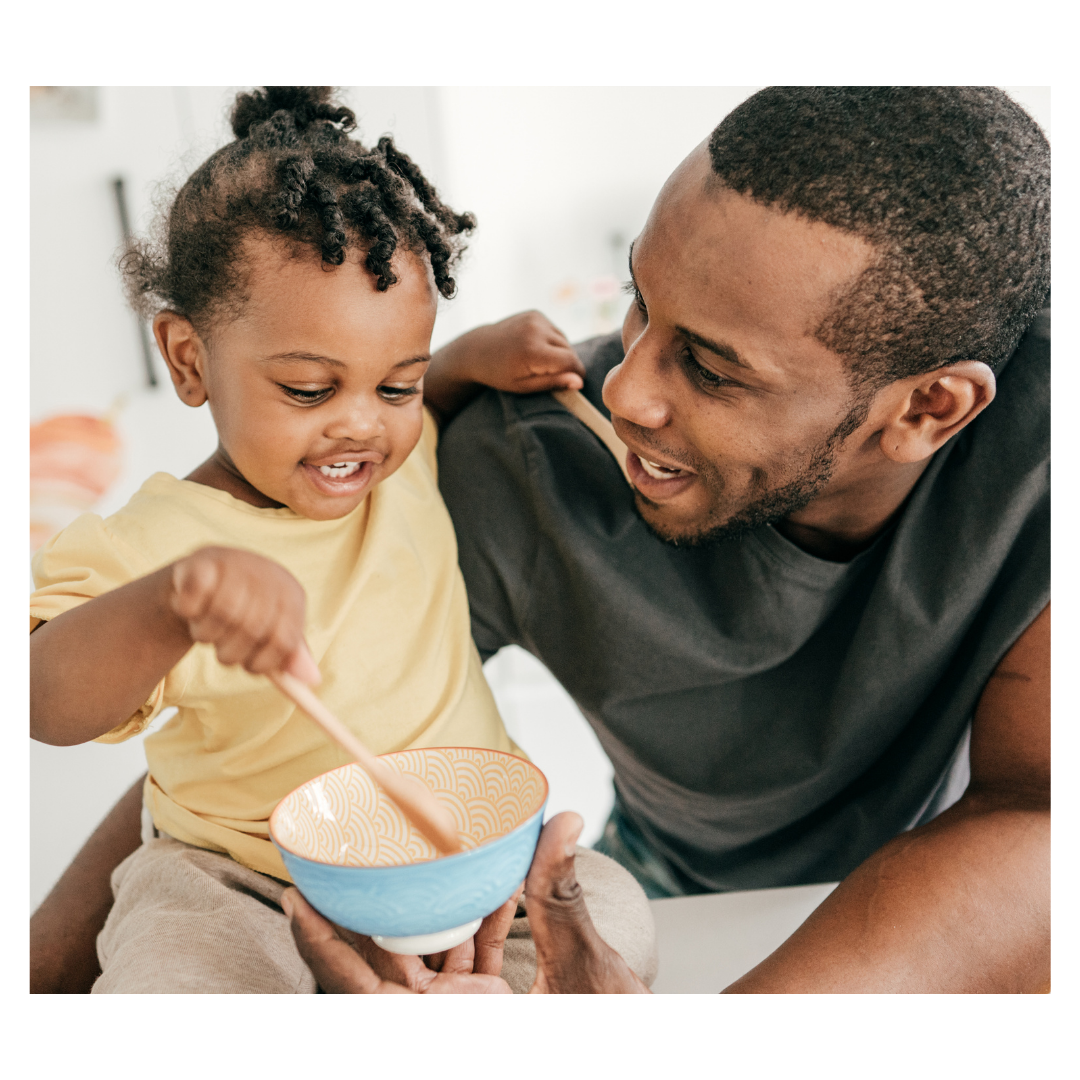
Mealtime is more than just eating, it’s a golden opportunity for language learning. Not only is it motivating (after all, who doesn’t love a tasty treat?), but it happens multiple times a day, every single day. Mealtimes are perfect for shared attention, connection, and conversation.
Here are some simple ways to encourage language:
Name the foods you’re serving.
Comment on the food—avoid quizzing. For example:
“Yum, the strawberries are sweet!”
“The carrots are crunchy!”
Expand on your child’s words. If your child says “banana,” try:
“Yellow banana”
“Yummy banana”
“Peel banana”
“Eat banana”
Bonus: Involve your child in cooking and serving. This opens even more opportunities for language and children are often more excited to eat what they helped prepare. Little chefs feel proud and motivated!
Bath Time
Splish splash, we love bath time! It’s predictable, calming, and a favorite part of a familiar nighttime routine. A relaxed environment is the perfect place for language learning.
Focus on:
Action words: splash, pour, dump
Talking about body parts
Use fun, repeated phrases during water play (like when pouring water) such as: “Ready, set… go!”
Car Rides
Beep beep! Between school runs, errands, or picking up siblings, we spend a lot of time in the car each day.
Try focusing on:
Labeling what you see: snow, trucks, buses, construction
Singing familiar songs (like Wheels on the Bus)
Pause and let your child fill in the words!
Brushing Teeth
Brushing teeth is part of both morning and bedtime routines, making it an easy place to add language.
Ideas include:
Turn-taking: Encourage your child to say “me!” when it’s their turn to brush.
Labeling face parts in the mirror: cheeks, tongue, teeth, nose, eyes, forehead, chin
Sequencing events: maybe you “forget” the toothbrush and see if your child tells you what’s missing! Language opportunities really are everywhere.
Getting dressed
Getting dressed is a great time to encourage language. Check out these ideas:
Offer choices: Give two or three options and let your child decide which to wear.
Practice sequencing and problem-solving: “Forget” to put out a clothing item and see if your child notices.
Encourage requests for help: Hand them their socks and see if they communicate a way to ask you to put them on.
Dressing routines are full of natural opportunities for language and independence!
Think about routines that are meaningful to your child or family. How can you naturally weave language into them in a way that feels personal and motivating? By following your child’s lead and meeting them where they are, you create the moments where fun and learning truly begin.
Progress, Not Perfection
Aim for progress, not perfection. You don’t need to implement every strategy at once, we’re not robots! By focusing on connection and repetition in everyday life, you’ll begin to see meaningful benefits over time.
Be sure to check out some of our other blog posts about early language and speech development:
If you have concerns about your child’s language development, seeking guidance is key. Speech-language pathologists can evaluate your child’s skills, pinpoint areas that may need support, and provide strategies to help their speech and language development.
Searching for Speech Therapy Near Me?
Contact us today for a free child development consultation, we’d love to hear from you! Our professionals will determine if an evaluation is recommended and provide answers to all your questions. We’re committed to guiding your child’s growth and success.